



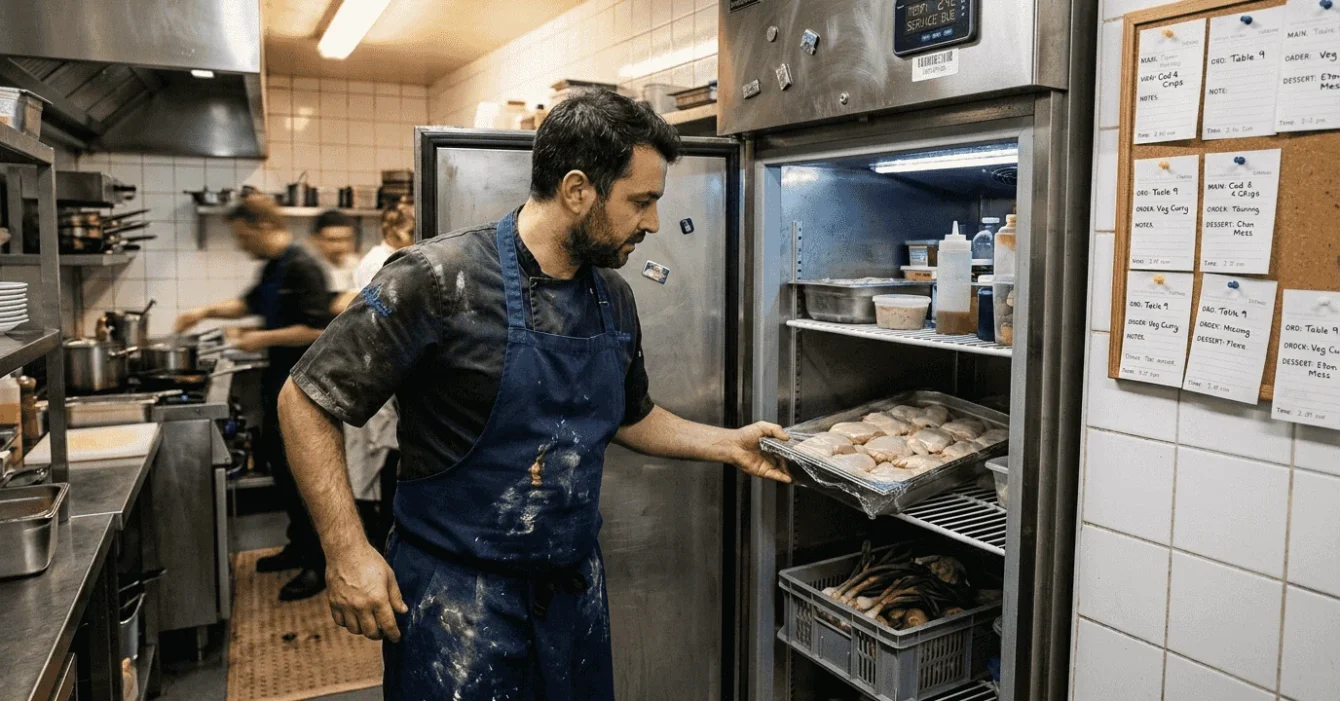
Most restaurant owners view refrigeration as straightforward cold storage. Yet effective refrigeration determines whether your kitchen meets food safety standards, controls operational costs, and maintains the customer trust your reputation depends upon. This guide explains why refrigeration is foundational to successful restaurant operations, how proper systems prevent waste and illness, and what steps you can take to optimise performance. You will learn practical strategies for selecting equipment, training staff, and implementing maintenance that protects both your business and your diners.
Table of Contents
- Understanding Refrigeration’s Role In Food Safety
- How Refrigeration Boosts Operational Efficiency And Reduces Waste
- The Impact Of Staff Training And Preventive Maintenance On Refrigeration Reliability
- Enhance Your Restaurant’s Refrigeration With EcoFrost Services
- Frequently Asked Questions
Key takeaways
| Point | Details |
|---|---|
| Food safety foundation | Proper refrigeration prevents bacterial growth and foodborne illness outbreaks |
| Operational efficiency | Energy efficient systems reduce running costs by 20 to 40 percent |
| Preventive maintenance | Regular servicing and staff training avoid costly breakdowns and spoilage |
| Regulatory compliance | Meeting temperature standards protects your licence and reputation |
| Customer trust | Reliable refrigeration ensures fresh ingredients and consistent menu quality |
Understanding refrigeration’s role in food safety
Refrigeration is the frontline defence against foodborne illness in your restaurant. Bacteria multiply rapidly at temperatures between 5°C and 60°C, the danger zone where pathogens like Salmonella and E. coli thrive. Keeping perishable foods below 5°C slows microbial growth to safe levels, protecting diners from illness and your business from liability. How commercial refrigeration prevents food waste demonstrates that reliable refrigeration cuts waste, ensures fresh menu offerings, and builds customer trust through consistent quality.
Compliance with food safety regulations requires precise temperature control. In the UK, the Food Safety Act 1990 and subsequent regulations mandate that high risk foods remain at or below 8°C, though best practice targets 5°C or lower. Failing to meet these standards risks enforcement action, fines, or closure. Refrigeration compliance in 2026 ensures you understand current legal requirements and avoid penalties that damage your reputation.
Spoilage costs UK restaurants thousands of pounds annually. When refrigeration fails, perishable stock spoils within hours, forcing you to discard ingredients and scramble for replacements. This waste directly erodes profit margins and disrupts kitchen operations during service. Effective refrigeration extends shelf life, reduces emergency ordering, and stabilises inventory costs.
Fresh ingredients define menu quality. Customers notice when produce wilts, proteins develop off odours, or dairy products sour. Consistent refrigeration preserves texture, flavour, and nutritional value, ensuring every dish meets your standards. This reliability builds repeat business and positive reviews that drive growth.
Staff must recognise refrigeration’s critical role. Training your team to monitor temperatures, report anomalies, and follow storage protocols prevents human error that compromises safety. A culture of vigilance around refrigeration protects everyone in your operation.
Pro Tip: Install digital temperature monitors with alerts to catch fluctuations before spoilage occurs, giving you time to address issues proactively.
How refrigeration boosts operational efficiency and reduces waste
Advanced refrigeration technology delivers substantial energy savings. Modern systems equipped with variable speed drives, LED lighting, and low global warming potential refrigerants consume 20 to 40 percent less electricity than older models. Reduce restaurant energy usage by 30 percent with refrigeration confirms that investing in efficient technology yields significant savings while meeting safety standards. Lower energy bills improve your bottom line and reduce environmental impact.
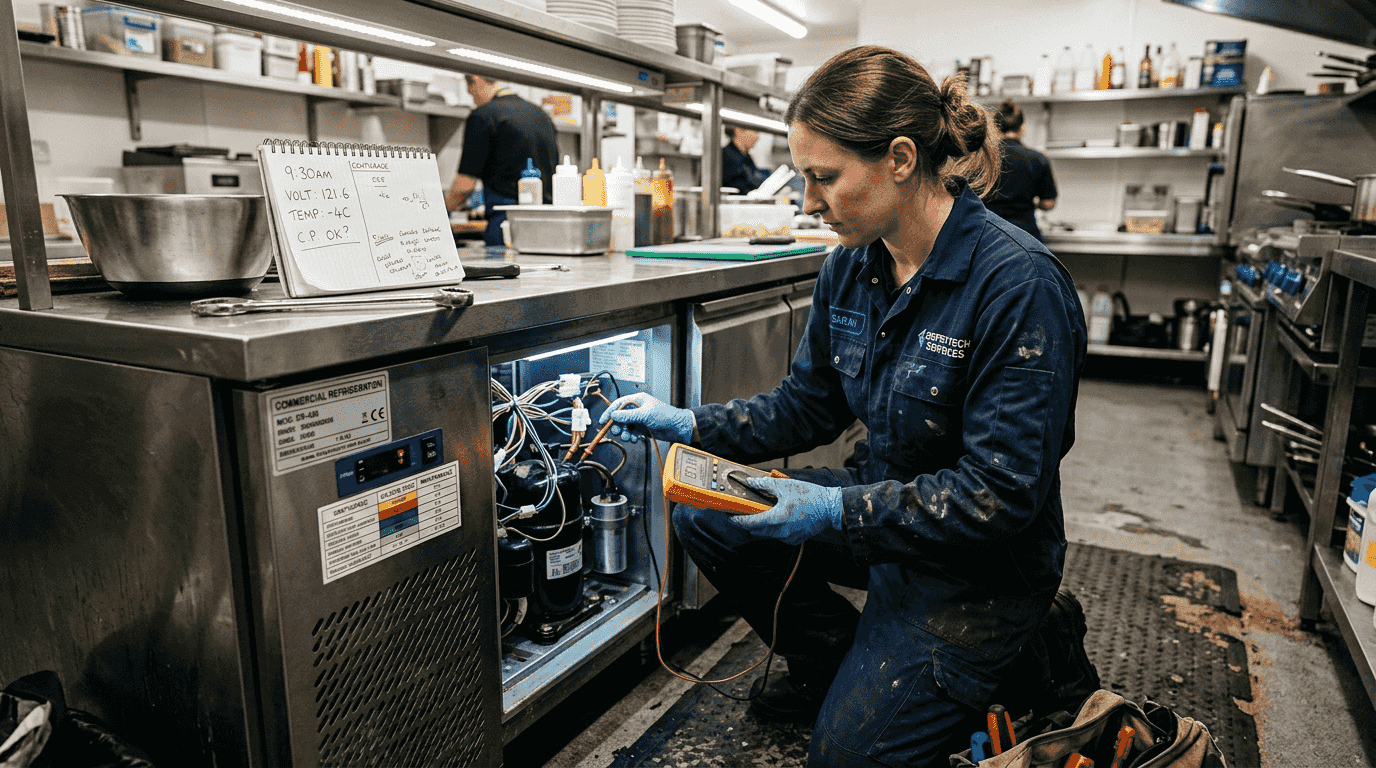
Regular maintenance prevents expensive breakdowns. A failed compressor during peak service costs you spoiled inventory, lost revenue, and emergency repair fees that dwarf routine servicing expenses. Scheduled inspections identify worn components before they fail, extending equipment lifespan and avoiding disruption. Preventive care is always cheaper than reactive repairs.
Choosing the right equipment matches your operational needs. A busy kitchen requires different refrigeration capacity and configuration than a small café. Restaurant refrigeration types 2026 explores walk in coolers, reach in units, prep tables, and display cases to help you select systems that maximise efficiency. Oversized equipment wastes energy, while undersized units struggle to maintain safe temperatures.
Monitoring software optimises refrigeration performance. Connected sensors track temperature, door openings, and energy consumption in real time, alerting you to inefficiencies or malfunctions. This data helps you adjust settings, schedule maintenance, and identify usage patterns that inform better practices. Selecting commercial refrigeration guides you through technology options that fit your budget and operational complexity.
Waste reduction improves margins and sustainability. Every kilogram of spoiled food represents wasted purchasing, labour, and disposal costs. Effective refrigeration preserves ingredients longer, allowing you to use stock fully and reduce bin waste. This efficiency supports both profitability and environmental responsibility, increasingly important to customers who value sustainable practices.
Pro Tip: Conduct monthly energy audits of your refrigeration systems to identify units consuming excessive power, then prioritise upgrades or repairs based on potential savings.
Refrigeration efficiency comparison
| System type | Energy consumption | Maintenance frequency | Typical lifespan |
|---|---|---|---|
| Standard reach in | High | Quarterly | 10 to 12 years |
| Energy efficient reach in | Moderate | Bi annual | 12 to 15 years |
| Walk in cooler | Variable | Quarterly | 15 to 20 years |
| Display case | Moderate to high | Monthly | 8 to 12 years |
The impact of staff training and preventive maintenance on refrigeration reliability
Preventive maintenance detects problems before they escalate. Technicians inspect refrigerant levels, clean condenser coils, test thermostats, and verify door seals during scheduled visits. These checks catch minor issues like worn gaskets or dirty filters that, left unaddressed, lead to system failure. Commercial refrigeration maintenance for restaurants emphasises prioritising preventive maintenance and staff training for efficiency and safety, using software for tracking to avoid failures during peak periods.
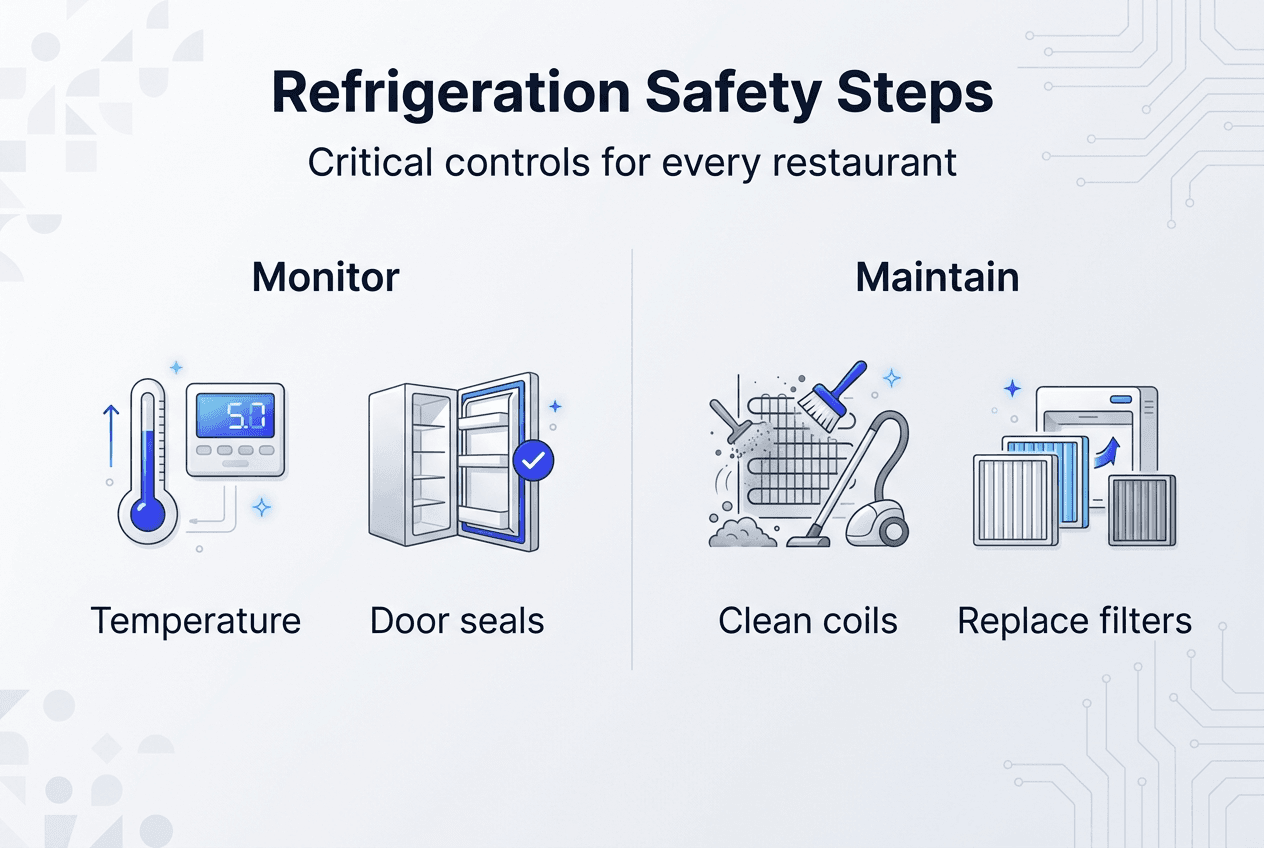
Well trained staff operate equipment correctly. Your team should understand proper loading techniques, the importance of closing doors promptly, and how to recognise warning signs like unusual noises or temperature fluctuations. Training reduces user error that strains systems and shortens equipment life. Empowered staff become partners in maintaining reliability.
Tracking software manages refrigeration performance across multiple units. Cloud based platforms log maintenance history, alert you to missed servicing, and generate reports that inform budgeting and replacement planning. This visibility prevents neglect and ensures every system receives timely attention. Commercial refrigeration maintenance services provide professional support that integrates with your operational management.
Unplanned downtime causes cascading problems. A malfunctioning freezer during dinner service forces you to transfer stock, potentially compromising quality and overwhelming backup units. Lost revenue from menu items you cannot serve compounds the crisis. Preventive maintenance and rapid response repair services minimise these disruptions. Refrigeration repair services ensure expert technicians address failures quickly, restoring operations with minimal loss.
A maintenance first approach prolongs equipment lifespan. Refrigeration systems represent significant capital investment. Regular care maximises return by extending useful life years beyond warranty periods. Well maintained units also command higher resale value if you upgrade, offsetting replacement costs.
Pro Tip: Create a visible maintenance checklist near each refrigeration unit so staff can perform daily checks and report issues immediately, catching problems before they require emergency intervention.
“Investing in preventive maintenance and staff training transforms refrigeration from a potential liability into a competitive advantage, ensuring consistent performance that customers notice and appreciate.”
Enhance your restaurant’s refrigeration with EcoFrost services
Professional installation ensures optimal system performance from day one. EcoFrost’s experienced technicians assess your kitchen layout, menu requirements, and workflow to recommend refrigeration solutions that match your specific needs. Commercial fridge freezer installation delivers precise setup that maximises efficiency and longevity, avoiding the costly mistakes of improper installation.
Regular maintenance from EcoFrost keeps your systems running reliably. Our comprehensive service plans include scheduled inspections, cleaning, and component replacement that prevent breakdowns and extend equipment life. EcoFrost maintenance services provide peace of mind that your refrigeration will perform when you need it most, protecting your investment and your reputation.
When issues arise, rapid repair minimises disruption. EcoFrost’s commercial refrigeration repair services deliver expert diagnosis and fixes that restore operations quickly. With over 10 years of experience across the UK, Qatar, and India, we understand the urgency of refrigeration failures and respond accordingly. Investing in professional services protects your business, your customers, and your peace of mind.
Frequently asked questions
Why is refrigeration so important in restaurants?
Refrigeration is essential because it prevents foodborne illness, reduces waste, and maintains menu quality. Without proper cold storage, bacteria multiply rapidly, ingredients spoil, and you risk regulatory violations that threaten your licence. Effective refrigeration supports every aspect of restaurant operations, from receiving deliveries to plating dishes. Learn more about refrigeration compliance overview to understand current standards.
How does refrigeration affect food safety?
Refrigeration slows bacterial growth by maintaining temperatures below 5°C, preventing pathogens like Salmonella from reaching dangerous levels. Proper storage also prevents cross contamination by separating raw proteins from ready to eat foods. Temperature control is your primary defence against foodborne illness outbreaks that endanger customers and destroy reputations.
What refrigeration maintenance should restaurant owners prioritise?
Prioritise regular temperature monitoring, filter cleaning, and condenser coil maintenance to ensure consistent performance. Schedule professional inspections quarterly to catch worn components before they fail. Train staff to recognise warning signs like unusual noises or temperature fluctuations, enabling early intervention that prevents costly breakdowns.
Can investing in new refrigeration technology save money?
Modern refrigeration systems reduce energy consumption by 20 to 40 percent compared to older models, delivering substantial savings on utility bills. Energy efficient units with variable speed drives and improved insulation pay for themselves over time through lower operating costs. The initial investment is offset by reduced energy expenses, fewer repairs, and extended equipment lifespan.
How often should restaurant refrigeration be serviced?
Most commercial refrigeration requires professional servicing every three to six months, depending on usage intensity and equipment type. High volume kitchens benefit from quarterly maintenance, while smaller operations may extend to bi annual schedules. Consistent servicing prevents breakdowns, maintains efficiency, and ensures compliance with food safety regulations.
What temperature should restaurant refrigerators maintain?
Restaurant refrigerators should maintain temperatures at or below 5°C for optimal food safety, though regulations permit up to 8°C. Freezers must stay at minus 18°C or colder to preserve frozen goods properly. Install calibrated thermometers in multiple locations within each unit to verify consistent temperatures throughout, as door areas often run warmer than interior spaces.
Recommended
- What is refrigeration compliance and why it matters in 2026
- Types of restaurant refrigeration for efficient food storage in 2026
- How to select commercial refrigeration for your business
- Commercial Refrigeration & Air Conditioning Repair Services – EcoFrost Hvac
- How to Safely Recover Refrigerant Without a Recovery Machine Home Therapist Cooling, Heating, and Plumbing