



Poor refrigeration maintenance causes food spoilage and inflates energy bills in restaurants. Without regular upkeep, your commercial fridges and freezers fail when you need them most, putting food safety at risk and driving up operating costs. This guide walks you through the essential steps to maintain your refrigeration equipment efficiently, from understanding your systems and preparing properly to executing maintenance tasks, troubleshooting common problems, and verifying long-term performance. By following these practical measures, you protect food quality, ensure compliance, and reduce energy waste.
Table of Contents
- Understanding Your Restaurant Refrigeration System
- Preparing To Maintain Your Refrigeration Units
- Step-By-Step Guide To Maintaining Restaurant Refrigeration
- Troubleshooting Common Refrigeration Problems
- Verifying Maintenance Success And Sustaining Performance
- How EcoFrost Can Support Your Restaurant Refrigeration Needs
- Frequently Asked Questions
Key takeaways
| Point | Details |
|---|---|
| Regular cleaning prevents failures | Monthly condenser coil cleaning and inspections stop costly breakdowns before they occur. |
| Correct temperature ensures safety | Daily temperature monitoring within safe ranges protects food quality and meets health regulations. |
| Prompt repairs reduce waste | Fixing issues quickly saves energy, prevents food spoilage, and extends equipment lifespan. |
| Professional servicing pays off | Scheduled expert maintenance catches hidden problems and maintains compliance with safety standards. |
Understanding your restaurant refrigeration system
Before you maintain anything, you need to know what you’re working with. Restaurant refrigeration comes in several forms, each designed for specific storage needs and kitchen layouts. Types of restaurant refrigeration vary widely across commercial kitchens.
Most restaurants rely on these common systems:
- Upright fridges and freezers for daily access to ingredients
- Undercounter units that save space whilst keeping items within reach
- Walk-in coolers and freezers for bulk storage and prep areas
- Display refrigeration for showcasing fresh items to customers
Each system contains four key components working together. The compressor pressurises refrigerant gas, raising its temperature. The condenser releases heat from the compressed refrigerant to the outside air. The evaporator absorbs heat from inside the unit, cooling the storage space. The thermostat monitors temperature and signals the compressor when to cycle on or off.
Understanding these basics helps you recognise problems early. When your compressor runs constantly, you know something is wrong with temperature control or heat release. When frost builds up on evaporator coils, you understand the defrost system needs attention. When condenser coils look caked with dust, you realise airflow is restricted and efficiency drops.
Temperature ranges matter for food safety. Refrigerators should hold between 0°C and 5°C for most fresh items. Freezers must stay at minus 18°C or colder to preserve frozen goods properly. Different foods require specific conditions, so verify storage requirements for your menu items.
Energy consumption varies dramatically between well-maintained and neglected units. A refrigerator with dirty coils works 30% harder to maintain temperature, burning extra electricity every hour. Worn door seals let cold air escape, forcing the compressor to cycle more frequently. These inefficiencies compound over time, turning a minor maintenance issue into a major cost centre.
Preparing to maintain your refrigeration units
Proper preparation prevents accidents and ensures thorough maintenance. Gather your tools and materials before starting any work on refrigeration equipment.
You’ll need these essential items:
- Food-safe cleaning agents approved for commercial kitchens
- Stiff brushes for condenser coils and soft cloths for surfaces
- Calibrated thermometers to verify temperature accuracy
- Protective gloves and safety glasses
- Vacuum with brush attachment for coil cleaning
- Screwdrivers and basic hand tools for panel removal
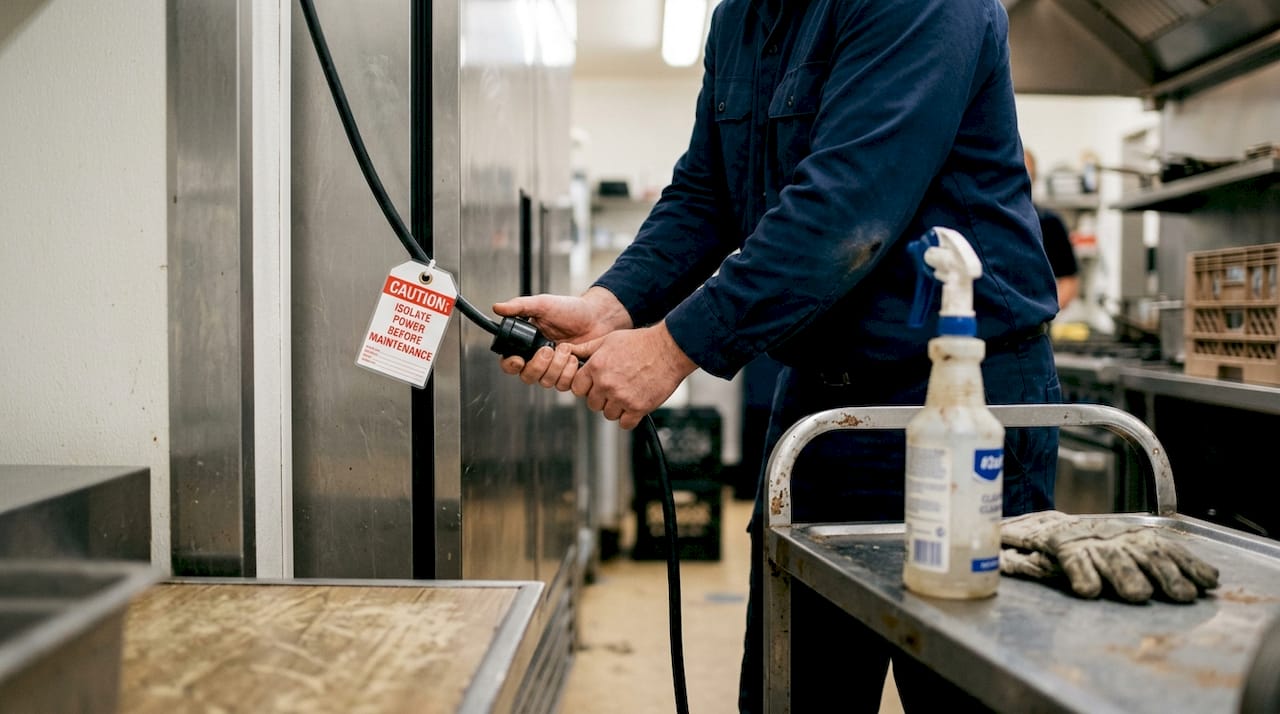
Safety comes first when working with refrigeration equipment. Always unplug units before cleaning internal components or removing panels. Wear protective gloves to avoid cuts from sharp metal edges and exposure to cleaning chemicals. Never spray cleaning agents near stored food or food contact surfaces. Keep electrical components dry and allow units to dry completely before reconnecting power.
Regulatory compliance requires documentation. Refrigeration safety in restaurants depends on maintaining proper records and following health authority guidelines. Keep a maintenance log noting dates, tasks completed, and any issues discovered. Health inspectors expect to see temperature records and maintenance documentation during audits.
| Preparation task | Frequency | Time required |
|---|---|---|
| Gather cleaning supplies | Before each session | 10 minutes |
| Review maintenance log | Weekly | 5 minutes |
| Schedule downtime | Monthly | 15 minutes planning |
| Check safety equipment | Before each session | 5 minutes |
Schedule maintenance during off-peak hours when kitchen activity is minimal. Early morning before service or late evening after closing works best for most restaurants. This timing minimises disruption to operations and gives you uninterrupted access to equipment. Coordinate with kitchen staff so they know which units will be offline temporarily.
Pro Tip: Create a maintenance checklist specific to each refrigeration unit in your kitchen. Note the model number, installation date, and unique quirks for each piece of equipment. This personalised approach saves time and ensures nothing gets overlooked during routine maintenance.
Step-by-step guide to maintaining restaurant refrigeration
Consistent maintenance keeps your refrigeration running efficiently and extends equipment lifespan. Follow these steps monthly for optimal performance.
-
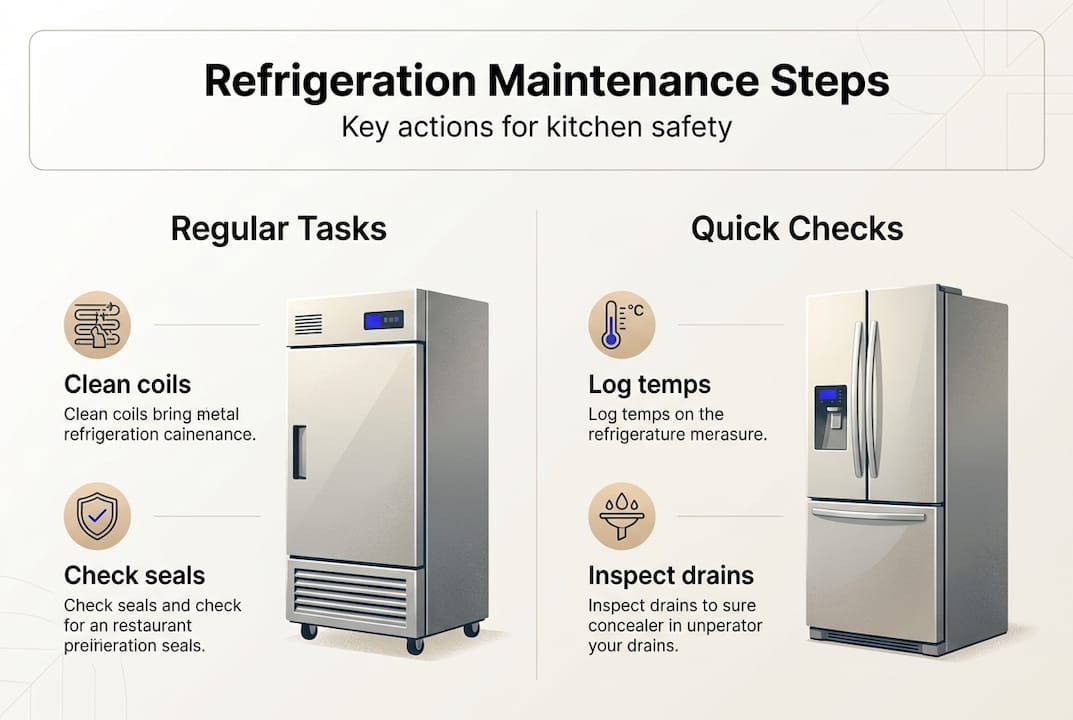
Clean condenser coils thoroughly using a vacuum with brush attachment. Remove dust, grease, and debris that restrict airflow and reduce cooling efficiency. Dirty coils force the compressor to work harder, increasing energy consumption and wear. Access panels vary by model, so consult your equipment manual for coil location.
-
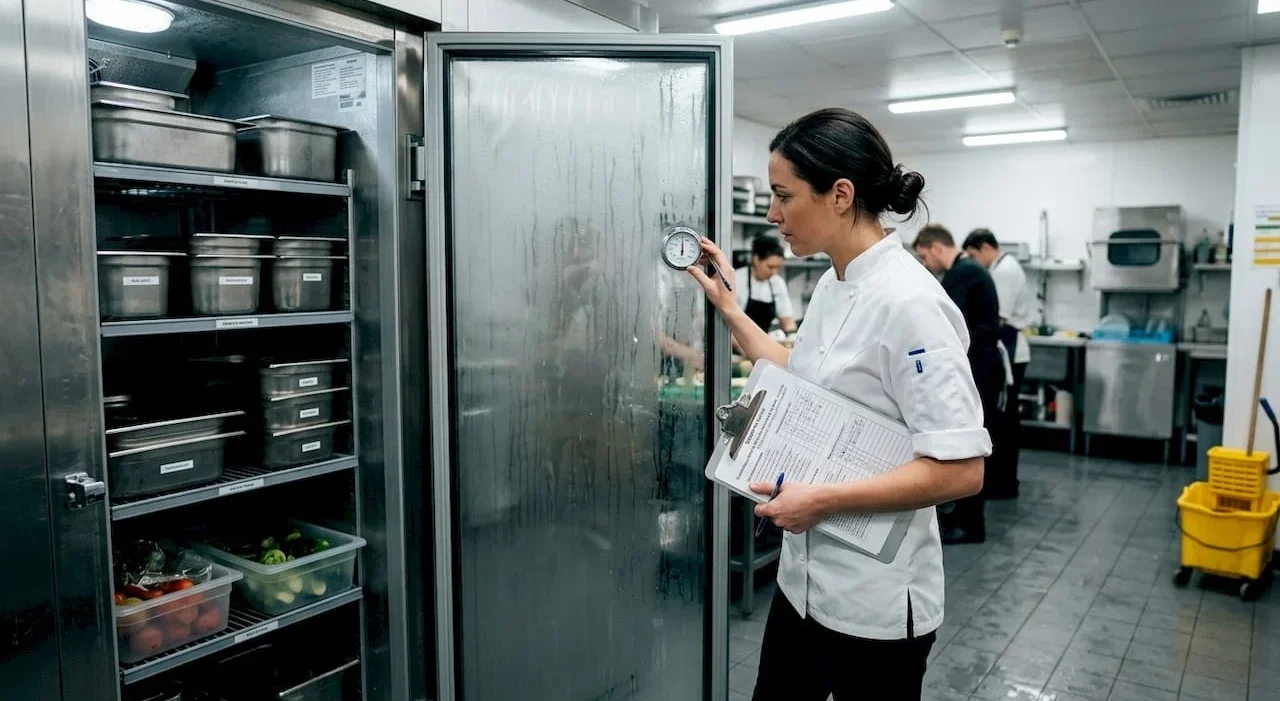
Check and record temperatures daily at multiple times. Use a calibrated thermometer to verify the built-in gauge accuracy. Record readings in your maintenance log to establish baseline patterns. Temperature fluctuations signal problems before they become critical failures.
-
Inspect door gaskets for cracks, tears, or gaps that break the seal. Close the door on a piece of paper and try pulling it out. If the paper slides easily, the gasket needs replacement. Damaged seals let cold air escape, forcing the unit to cycle constantly and wasting energy.
-
Keep air vents and circulation fans clear of obstructions. Don’t overfill units or block vents with storage containers. Proper airflow ensures even temperature distribution throughout the storage space. Restricted airflow creates warm spots where food spoils faster.
-
Test defrost systems and drain lines regularly to prevent ice build-up. Ice on evaporator coils reduces cooling capacity and efficiency. Blocked drain lines cause water to pool inside units, creating slip hazards and potential contamination. Pour warm water mixed with a small amount of bleach down drain lines to keep them clear.
-
Tighten loose hardware and lubricate hinges on doors. Check that shelves sit level and secure. Listen for unusual noises during operation that might indicate worn bearings or loose components. Address minor issues before they escalate into major repairs.
Commercial fridge and freezer maintenance requires attention to detail and consistency. Missing even one monthly cleaning session allows problems to develop unchecked.
Pro Tip: Take photos of clean condenser coils after maintenance. Compare these baseline images during your next inspection to quickly assess how much dirt has accumulated. Visual references make it easier to judge when cleaning is needed again.
Troubleshooting common refrigeration problems
Recognising problems early prevents costly breakdowns and food loss. Learn to diagnose common issues and know when professional help is necessary.
These frequent problems affect restaurant refrigeration:
- Temperature fluctuations that put food safety at risk
- Excessive ice build-up on evaporator coils
- Water leaks inside or around units
- Unusual noises like grinding, squealing, or clicking
- Compressor cycling too frequently or running constantly
Diagnosing the cause requires systematic checking. Temperature issues often stem from dirty condenser coils restricting heat release or faulty thermostats sending incorrect signals. Ice build-up indicates defrost system failure or blocked drain lines. Water leaks point to clogged drains or damaged door seals allowing humid air inside. Strange noises suggest worn compressor components, loose fan blades, or failing motors.
| Issue | DIY fix | Professional repair |
|---|---|---|
| Dirty coils | Clean monthly with vacuum and brush | Call if cleaning doesn’t restore efficiency |
| Minor seal gaps | Replace gasket following instructions | Needed for custom seal fabrication |
| Blocked drain | Clear with warm water and bleach | Required if drain line is damaged |
| Temperature drift | Adjust thermostat, verify with thermometer | Essential for compressor or refrigerant issues |
| Unusual noises | Tighten loose panels and hardware | Necessary for motor or compressor problems |
Know your limits with DIY repairs. Simple tasks like cleaning coils, replacing gaskets, and clearing drains are safe for restaurant staff. However, electrical work, refrigerant handling, and compressor repairs require licenced professionals. Commercial refrigeration repair services provide expert diagnosis and certified repairs that maintain warranty coverage.
Never attempt electrical repairs or refrigerant work without proper certification. Refrigerant handling requires legal authorisation, and electrical work poses serious safety risks. Improper repairs void warranties and create liability issues if equipment failures cause food spoilage or injuries.
Document every problem and repair in your maintenance log. Note when issues first appeared, what symptoms you observed, and what actions resolved them. This history helps technicians diagnose recurring problems and proves due diligence during health inspections. Patterns in your log reveal whether specific units need replacement or if operational practices need adjustment.
Some issues require immediate professional attention regardless of your maintenance efforts. Refrigerant leaks, compressor failures, and electrical problems demand expert intervention. Continuing to operate faulty equipment risks food contamination, higher repair costs, and potential safety hazards. When you spot serious problems, contact commercial fridge and freezer installation specialists who can assess whether repair or replacement makes better financial sense.
Verifying maintenance success and sustaining performance
Maintenance only works if you verify results and sustain good practices long term. Implement systems that catch problems before they disrupt operations.
Temperature logging provides the clearest evidence your refrigeration works properly. Record temperatures at least twice daily, ideally at the start and end of service. Plot these readings on a simple chart to visualise trends. Gradual temperature creep upwards signals declining efficiency even before food safety becomes compromised. Sudden spikes indicate immediate problems requiring attention.
Energy monitoring reveals hidden inefficiencies. Compare monthly electricity bills to establish baseline consumption for your refrigeration equipment. Unexpected increases of 15% or more suggest maintenance issues even when temperatures seem stable. Modern energy monitors can track individual circuit consumption, pinpointing which units consume excess power. This data justifies repair investments by quantifying energy savings.
Schedule professional servicing annually at minimum. Technicians spot problems invisible to untrained eyes, like refrigerant levels slightly below optimal or compressor components showing early wear. Annual inspections cost far less than emergency repairs during busy service periods. Professional servicing also maintains warranty coverage and demonstrates compliance during health inspections.
Staff training multiplies your maintenance effectiveness. Teach kitchen staff to recognise warning signs:
- Frost accumulation on products or shelving
- Condensation on exterior surfaces
- Doors that don’t close smoothly or seal properly
- Changes in compressor noise or cycling patterns
Empowered staff catch issues immediately rather than days later when spoilage occurs. Create a simple reporting system where anyone can flag concerns without blame or hassle.
Refrigeration compliance and verification requires maintaining detailed records. Keep maintenance logs, repair invoices, temperature records, and professional inspection reports for at least three years. Organised documentation proves due diligence if health authorities question food safety practices. Digital records with cloud backup prevent loss from accidents or equipment failures.
Review your maintenance programme quarterly. Assess whether current schedules prevent problems or if you’re still experiencing frequent issues. Adjust cleaning frequency, upgrade aging equipment, or increase staff training based on actual performance data. Continuous improvement keeps your refrigeration reliable and efficient as your restaurant evolves.
How EcoFrost can support your restaurant refrigeration needs
Maintaining restaurant refrigeration demands expertise and consistent effort. When you need professional support, EcoFrost delivers comprehensive solutions tailored to commercial kitchens.
Our commercial air conditioning installation services extend to complete refrigeration systems, ensuring your kitchen maintains optimal conditions for food safety and operational efficiency. We design installations that match your specific storage requirements and kitchen layout, avoiding the common mistakes that lead to premature equipment failure.
Experienced technicians provide commercial refrigeration repair services when problems arise, responding quickly to minimise downtime and food loss. Our diagnostic approach identifies root causes rather than applying temporary fixes, saving you money on repeat service calls.
Preventative maintenance packages through EcoFrost services and maintenance keep your refrigeration running efficiently year-round. We handle the technical details whilst you focus on running your restaurant, providing documentation that satisfies health inspectors and maintains compliance with current regulations.
Frequently asked questions
How often should restaurant refrigeration be maintained?
Maintenance frequency depends on usage intensity and equipment age. Clean condenser coils monthly and schedule professional servicing annually at minimum. High-volume kitchens benefit from quarterly professional inspections. Daily temperature checks remain essential regardless of maintenance schedule, as they provide early warning of developing problems before food safety is compromised.
What are the signs my refrigeration needs professional repair?
Persistent temperature fluctuations despite maintenance indicate serious issues requiring expert diagnosis. Strange noises like grinding or squealing suggest worn components that will fail without replacement. Water leaks, excessive frost build-up, and compressors running constantly all signal problems beyond routine maintenance. Don’t delay professional repairs, as continued operation risks food spoilage and higher energy costs whilst potentially causing additional damage.
Can poor refrigeration maintenance affect compliance and food safety?
Yes, inadequate maintenance directly threatens food safety and regulatory compliance. Equipment that can’t maintain proper temperatures creates ideal conditions for bacterial growth and foodborne illness. Health authorities expect documented maintenance records and temperature logs during inspections. Failure to maintain refrigeration properly results in violations, fines, and potential closure. Refrigeration safety in restaurants depends on consistent upkeep and proper documentation.
What energy-saving tips help reduce refrigeration costs?
Regular condenser coil cleaning improves efficiency by 25% or more, directly reducing electricity consumption. Check door seals monthly and replace damaged gaskets immediately to prevent cold air loss. Defrost units before ice builds up thicker than 6mm, as ice acts as insulation that forces compressors to work harder. Avoid overloading units and keep air vents clear to optimise circulation. These simple practices deliver measurable energy-saving refrigeration tips without capital investment.